

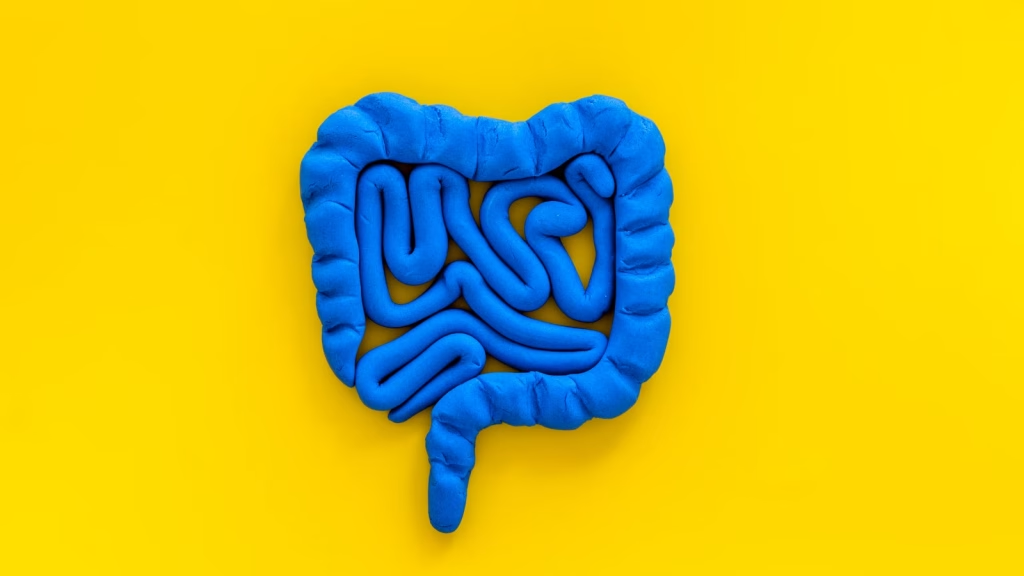
How gut health influences hormone balance, with insights on the estrobolome, serotonin production, and the impact of microbial diversity.
Most conversations about gut health begin and end with probiotics. The research points to something broader. The gut is an ecosystem comprising five groups of organisms (bacteria, fungi, viruses, archaea, and protozoa) and also functions as an endocrine organ. Bacteria make up around 97 to 99 percent of a healthy community, and the remaining groups are a small but influential minority.
Do probiotics balance your hormones?
Balance matters more than numbers.
The gut is an endocrine organ
Around 90 percent of the body’s serotonin is made by enterochromaffin cells in the gut. Spore-forming bacteria from the microbiota stimulate that production, which in turn influences gut motility. Fermentation also drives appetite and blood sugar signals. When bacteria ferment dietary fiber, the short-chain fatty acids they produce prompt colonic L cells to release GLP-1 and PYY, hormones involved in fullness and insulin release. Mice lacking the receptors for these fatty acids secreted less GLP-1 and had impaired glucose tolerance. Much of this mechanistic work comes from cell and animal models. Even so, what your bacteria can ferment shapes your hormonal signaling.
2. The estrobolome: gut helps regulate estrogen
The estrobolome is the collection of bacterial genes that can metabolize estrogens, and the enzyme beta-glucuronidase is its central working member. When dysbiosis and lower diversity reduce this deconjugation, circulating estrogen can fall. This is relevant to perimenopause, PMOS, and fertility, where estrogen swings are central. It remains an emerging area. Researchers still do not know whether these genes are actively expressed in humans, or whether the enzyme activity seen in animal models carries over.
3. The same soy meal can produce different hormonal effects
Gut bacteria convert the soy isoflavone daidzein into equol. Equol binds estrogen receptor beta more strongly than other soy isoflavone metabolites, yet only 30 to 50 percent of people harbor the bacteria needed to make it. The relevant bacteria are not absent in non-producers. A study of over a thousand adults found equol-converting bacteria in both producers and non-producers, with higher abundance of certain species in producers; daidzein intake was also associated with production status. Two women can eat the same fermented soy and receive different hormonal benefits, depending on their microbial community.
4. In PMOS, the gut may sit upstream of the ovary

A study in Nature Medicine found that Bacteroides vulgatus was markedly elevated in women with PMOS, alongside lower levels of certain bile acids. Transplanting stool from women with PMOS into mice worsened ovarian function and insulin resistance and reduced interleukin-22. Bile acids are signaling molecules as well as digestive aids, which is why bile acid metabolism keeps appearing in hormonal research. The causal evidence here comes from mouse studies, so human trials are needed to confirm it. Fermentable fibers and resistant starch feed the bacteria that produce the fatty acids described above, and restriction narrows that supply.
5. Thyroid health depends on absorption and immune tolerance
The microbiota influences the absorption and metabolism of iodine, selenium, iron, and zinc, all of which are needed for thyroid hormone synthesis, and patients with autoimmune thyroid disease show lower levels of Bifidobacterium and Lactobacillus. The evidence needs careful reading. Some studies report conflicting results, and several aspects of the gut-thyroid relationship still need clarification. Recurrent fatigue, hair shedding, and low ferritin despite adequate intake are reasons to consider gut function, not just the thyroid panel.
6. The kingdoms no one talks about
- Fungi: They make up under 1% of the community, but they are large and immunologically potent. Their cell wall components, beta-glucans and mannans, signal through host immune receptors, and they compete with bacteria and exchange metabolites. In IBD, research points to altered fungal composition rather than a simple deficiency. Links between gut fungi and hormones are still early. A practical point is that many opportunistic fungi respond strongly to easy sugars.
- Archaea: Methane-producing archaea are associated with slower transit and constipation-predominant IBS. Slower transit also allows more time for bile-excreted compounds, including estrogen, to be reabsorbed. These are mostly bacteriophages, which shape which bacteria dominate. This is one more reason a bacteria-only view of the gut misses part of the picture.
7. What the research says about probiotics
Probiotics are useful in specific situations, such as Saccharomyces boulardii for antibiotic-associated diarrhea. As a universal foundation, they are less convincing. In a study of healthy volunteers after antibiotics, probiotics markedly delayed the return of the native gut microbiome and left it incomplete, while a person’s own stool microbiota restored it within days. Colonization also varies between individuals. Strain lists and CFU counts matter less than whether the ecosystem underneath is being fed.
You may also like


- Plant diversity: In the American Gut Project, people who ate more than 30 different plant types per week had more diverse microbiomes than those who ate 10 or fewer. The comparison groups were small (41 and 44 people), and the data are observational.
- Fermented foods: In a Stanford trial, a diet high in fermented foods increased microbial diversity and reduced levels of 19 inflammatory proteins, including interleukin-6. The high-fiber group saw no change in diversity over that period. The trial was small, with 36 healthy adults, so treat it as a strong signal rather than a definitive answer. Curd, kefir, kanji, fermented idli and dosa batter, tempeh, and traditionally fermented vegetables all fit.
- Fiber types, not just fiber: Different fibers feed different bacterial enzymes. Okra, cluster beans, and flax gel provide mucilage.
- Protecting diversity: Blanket low-FODMAP diets and extreme restriction reduce the substrates bacteria need when maintained long-term. Repeated antibiotic and antimicrobial use, ultra-processed diets, poor sleep, and chronic stress also erode diversity.
Gut health is worth a more nuanced conversation than “take a probiotic.” The gut produces hormones, recycles them, and shapes how nutrients reach the glands that use them. The strongest lever is a varied, well-fed ecosystem, built over time through food.
DISCLAIMER: I hereby declare that I do not own the rights to this content. All rights belong to the owner. No Copyright Infringement Intended. If we have any information on our website that may affect your rights, please inform us at info@aihba and we will remove it immediately.


